Department of Racial Justice and Movement Building (DRJaM)
DRJaM is a 10-year initiative created to build the analysis, skills, and capacities of the art and culture ecosystem and social justice movements to collaborate sectorally. It nourishes coalitions and organizes cultural workers toward strategy development and collective action.
Learn About Our Origins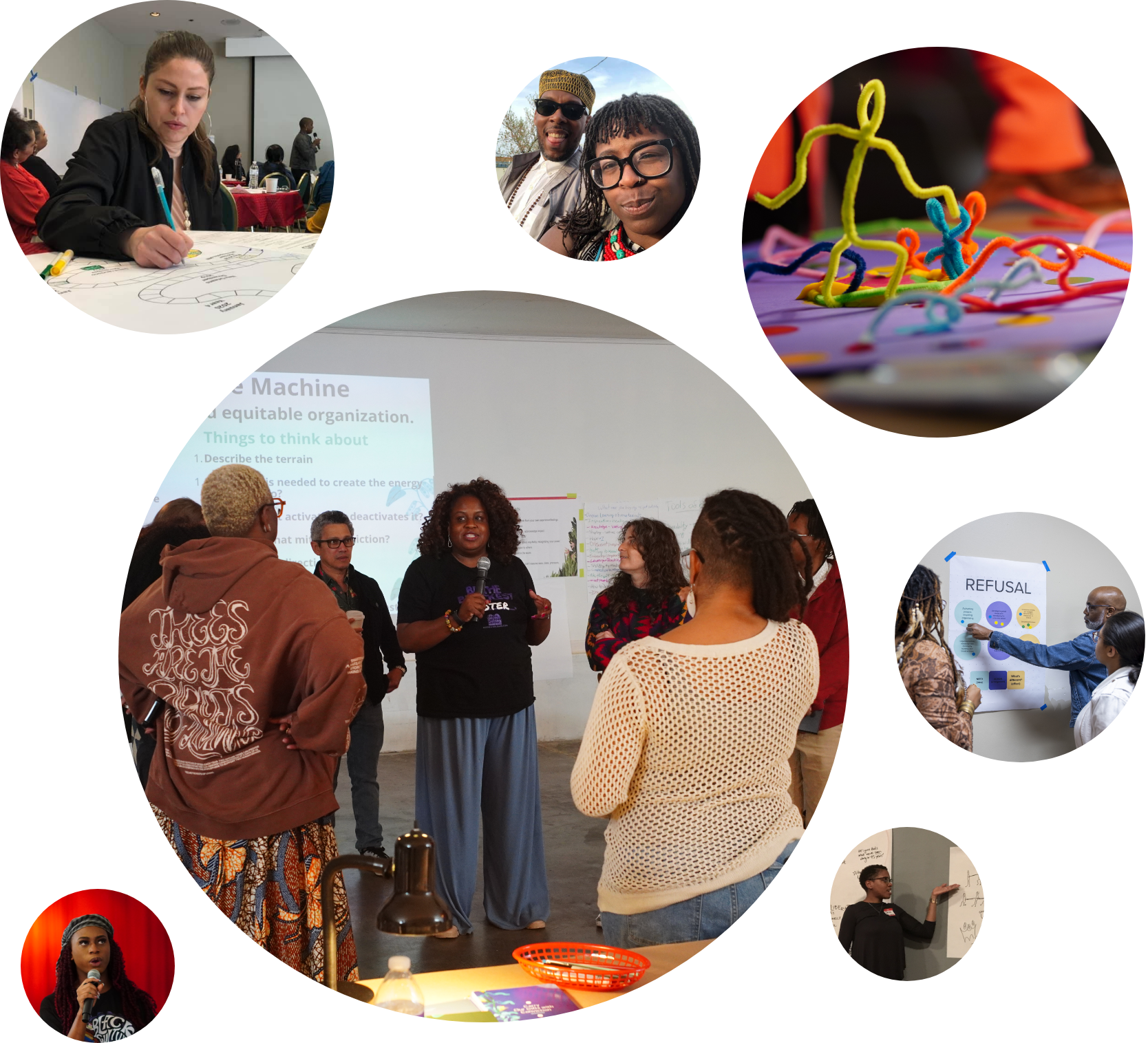
DRJaM’s Purpose
In alignment with NPN’s work with its National Partners and the broader arts field, DRJaM explores what capacities, relationships, and resources are necessary for art and culture practitioners and organizations to become political instruments.
Four Pillars of DRJaM
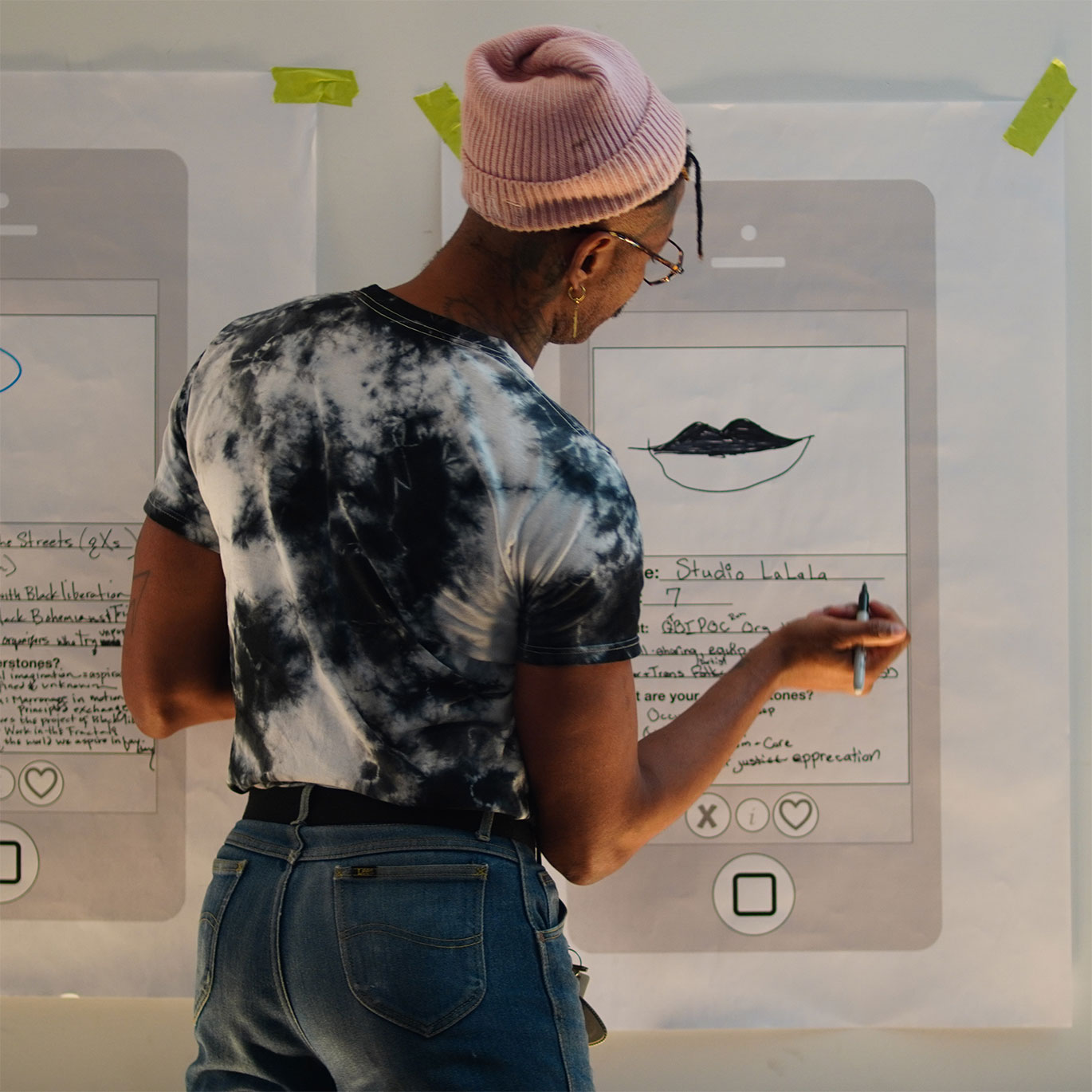
What becomes possible in our sector when we are in ideological alignment, deep learning, relationship building, and principled practice?
Ideological Alignment
Developing a shared understanding of oppressive systems; connecting cultural work to liberation movements.
Deep Learning
Going beyond diversity training to study movement histories and organizing strategies.
Relationship Building
Cultivating trust and reciprocity between artists, organizations, funders, and movement partners.
Principled Practice
Implementing collaborative strategies and refining tactics for material change.
Programs & Resources
DRJaM’s programs are designed to prepare and activate the NPN Network to grow in ways that support the Building Movement Project’s five stages of movement building: making the invisible visible, relationship building, infrastructure, catalyst, and sustained action.
Grants & Partnerships
Praxis Projects

Builds local organizing infrastructure through connecting cultural organizations to social justice organizations to exchange knowledge and deepen collaborative practices.
Cultural Writing Program
Culture Justice Initiative
Seeks to reduce gaps in understanding and practice between social justice movements and cultural work.
Educational Resource
Collective Learning

Political education resource of books, podcasts, and recorded discussions focused on developing strong assessments, theory, and practices.
A Cultural Political Conversation
Strata

A political education curriculum for social media designed to deepen our engagement with culture on the road to collective liberation.
Network Strategies
Collective Action

Innovating structures, policies, and processes that deepen solidarity among Network members as they face direct and systemic attacks.
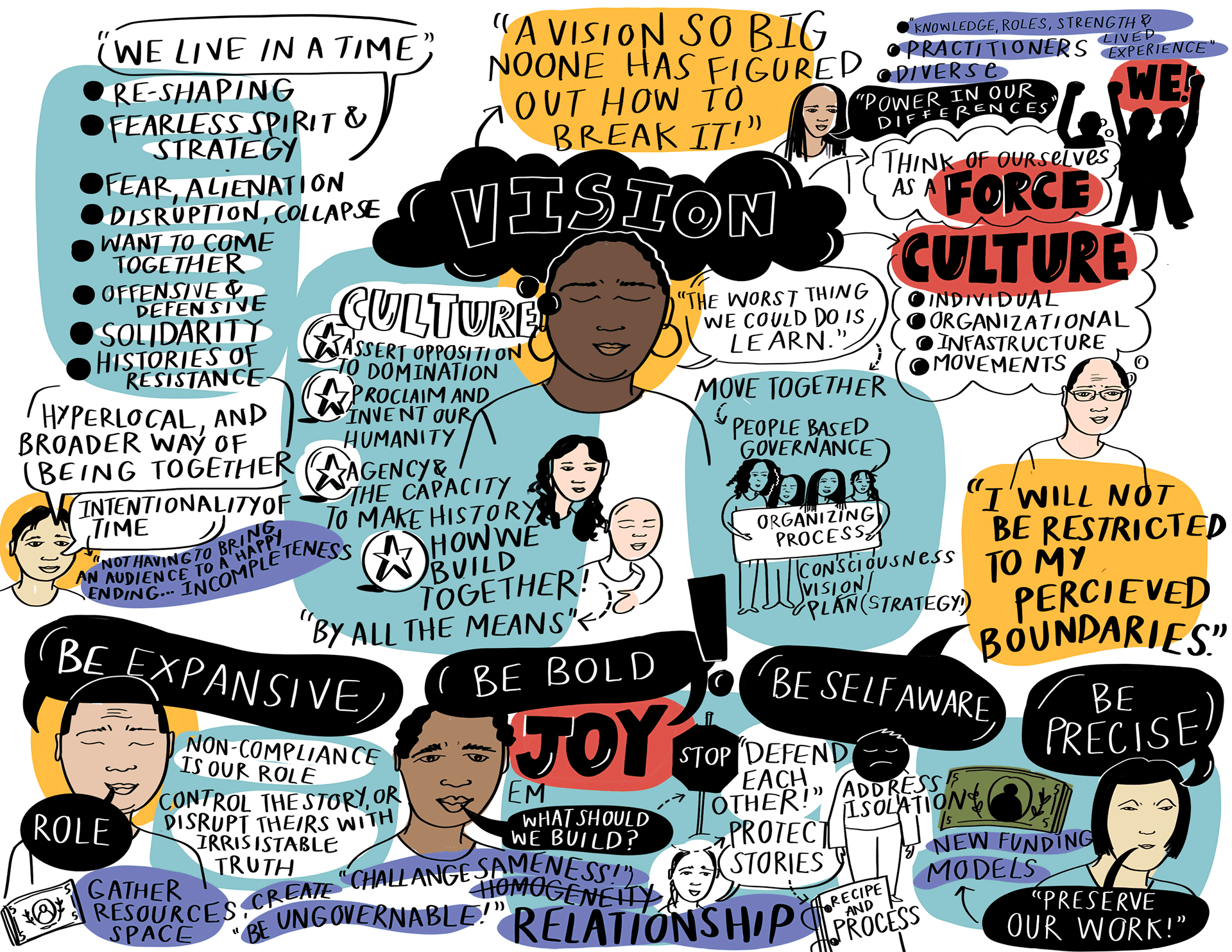
“Culture is not a mere artifact or expression of aesthetics, custom, or tradition. It is a means by which people assert their opposition to domination, a means to proclaim and invent their humanity, a means to assert agency and the capacity to make history. In a word, culture is one of the fundamental tools of the struggle for emancipation.”