DRJaM’s Origins
Within justice movements throughout history, art and culture have played an instrumental role in the development of movement strategy and implementation. In the 1930s, Martinician Feminist activitst Suzanne Césaire’s engagement with Surrealism shaped the Négritude movement, which laid an ideological foundation for Movement 4 Black Lives and Black Lives Matter. Similarly, the Free Southern Theater was part of the base building and political education strategy of the Student Nonviolent Coordinating Committee.
After witnessing a cascade of devastating closures of NPN National Partner organizations that were primarily led by people of color and that served as crucial artistic anchors in their communities, NPN immersed itself in the historic relationship between art, culture, and justice to address the systemic racial and economic conditions that undermined these cultural institutions. This led to the launch of Leveraging a Network for Equity (LANE).
LANE worked intimately with art and culture organizations to help them align their organizational cultures with their artistic missions, and develop sustainability approaches that honor community values over white supremacy culture (PDF).
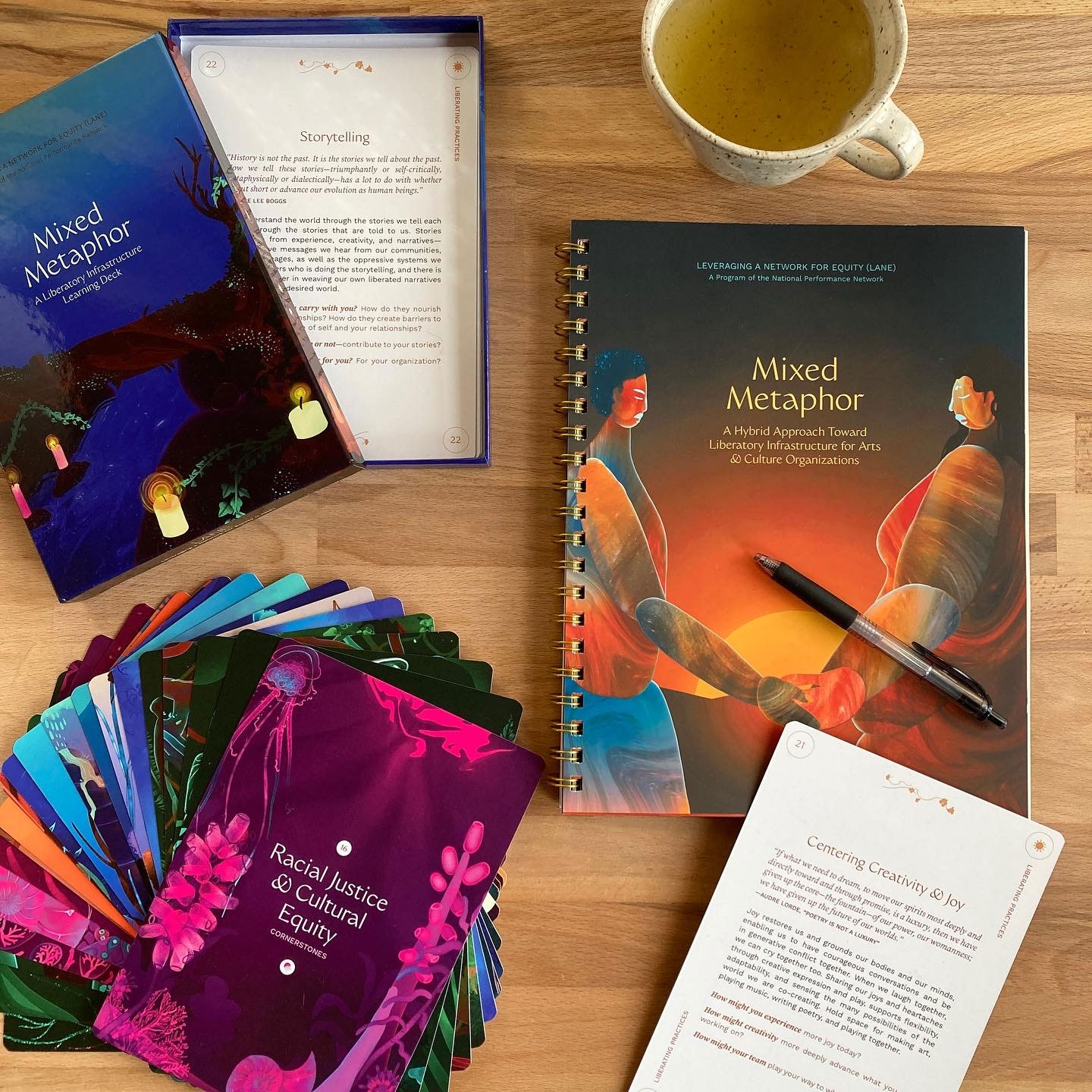
For nearly a decade, LANE supported the brave and brilliant transformations within these organizations, and closed out the initiative by collecting our shared knowledge into our Theory of Change (PDF), as well as the liberatory infrastructure toolkit Mixed Metaphor.
But while LANE helped transform organizations, the conditions around them must transform as well. Instead of simply redistributing wealth, the art and culture sector needs to address the systems that create inequity in the first place.
Building on this foundation of learning and resilience, the Department of Racial Justice and Movement Building (DRJaM) emerged in late 2022 as LANE’s natural evolution, expanding from supporting individual organizations to catalyzing sector-wide transformation.