
NPN’s Ethical Treatment Rider: A Collaborative Tool for Artists’ Well-Being
By Riley Yaxley, NPN Resource Development Manager
October 22, 2026
• 7 minute read
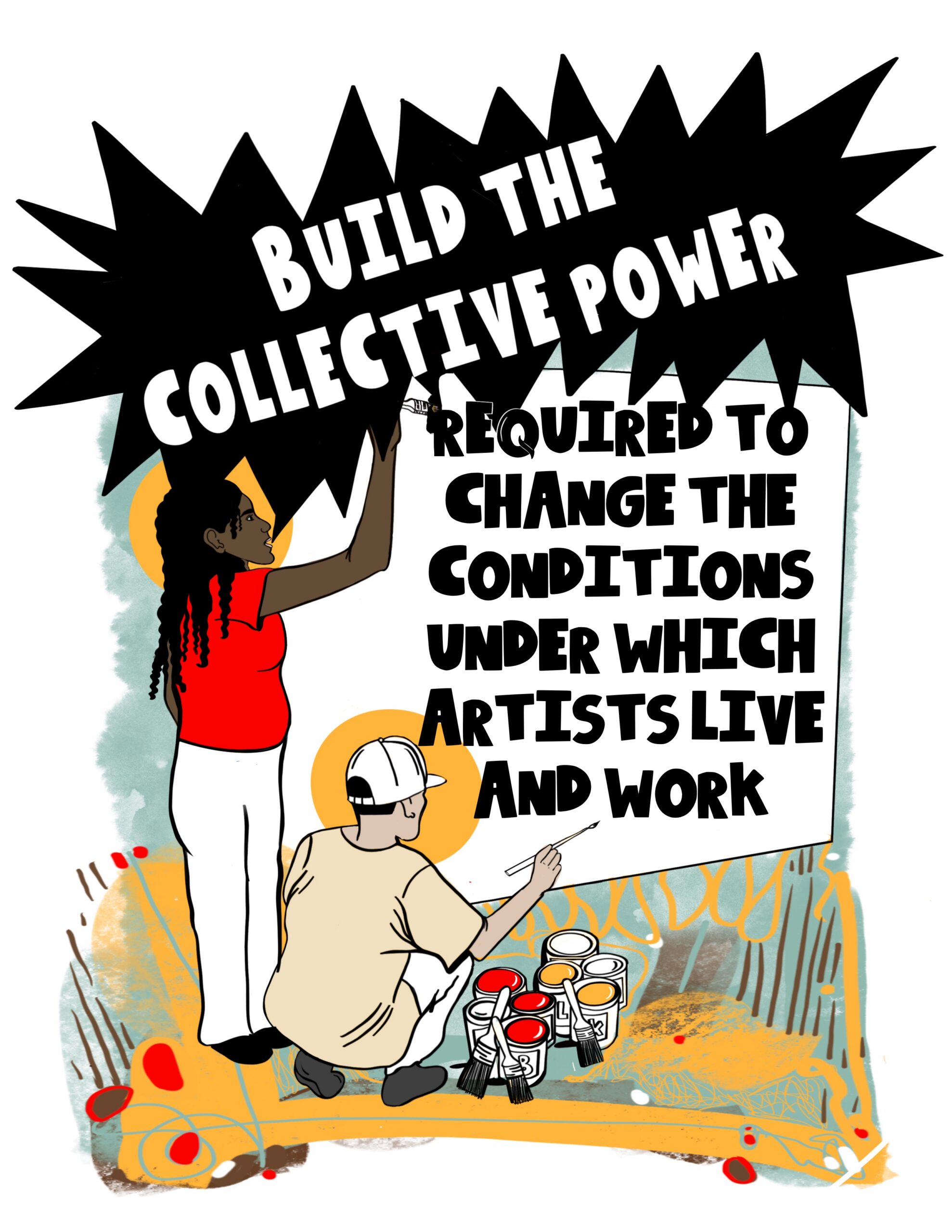
For the National Performance Network (NPN), funding artists to create, develop, and share work is not enough. We must also build the collective power required to change the conditions under which artists live and work.
At the core of NPN’s work is a commitment to building both financial and relational infrastructure, rooted in reciprocity between artists, presenters, and audiences, and ongoing accountability to ethics and equity in arts presenting.
NPN’s ethical treatment rider is one example of these values in practice. To receive funding through our commissioning program – the Creation & Development Fund – NPN, co-commissioners, and artists must all agree to equitable pay and ethical practices. This rider is embedded in our contracts, providing a model for good relationships and ensuring both legal and relational tools to protect the artists’ well-being. The rider also guides NPN’s role as intermediary if conflicts arise.
When a composer and performer received their first Creation & Development Fund from NPN a few years ago to develop a genre-defying work incorporating music and performance, the artist was ecstatic. With multiple co-commissioning organizations across the country, this opportunity meant the artist could fully realize their ambitions with this performance, and as an artist, presenting their work on new, larger stages.
However, the artist’s excitement waned as their relationship with one of the co-commissioners soured due to misleading conversations about budget and disagreements about how the artist would be credited for their work. The artist genuinely believed they might have to concede creative agency and withdraw from the production altogether, until their project manager intervened and requested NPN mediate the conflict.
Why We Created the Rider
Advocating for equitable wage standards was part of NPN’s founding purpose more than 40 years ago, though today’s ethical treatment rider was developed more recently. During our New Orleans Conference in December 2019, artists challenged attendees to address the dynamics that often create conflict between artists and presenters, with artists most frequently at a disadvantage. NPN convened an Artist Advisory Council after the gathering to examine our contracts and recommend changes to NPN’s policies and practices. The Council was comprised of geographically- and experientially-diverse artists at various career stages, including Lyam Gabel, Dahlak Brathwaite, Jalisa Roberts, Jorge Rojas, Judy Smith, Leilani Chan, Makini (jumatatu m. poe), Rosy Simas, Samuel Valdez, and Salome Asega.
NPN has long used a three-way, reciprocal letter of agreement between NPN, the presenter, and the artist, which outlines a set of shared values and equitable terms for how we are in relationship with each other, along with fee standards. Each party commits to these terms when signing an NPN contract, creating a tool for accountability.
The Artist Advisory Council’s work to reshape the ethical treatment rider quickly took on more urgency amid the tumultuous upheaval of the Covid-19 pandemic. These efforts developed alongside NPN’s partnerships with Creating New Futures and W.A.G.E. to draft and test new contracts between artists and presenters rooted in shared risk and transparency, clearer expectations, thriving wage and labor practices, and working conditions that center artists’ well-being.
“NPN’s National Network felt like the place to test these contracts,” explains Stanlyn Brevé, NPN’s Director of National Programs, “because we have deep, reciprocal relationships with our Partner organizations who choose to engage in shared political grounding, mutual accountability, and long-term learning—together.” This ongoing commitment has made NPN’s Partner Network critical infrastructure in our sector for testing and implementing ethical standards.
NPN’s ethical treatment rider addresses a longstanding issue in the performing arts field, one that Brevé observed early in her tenure at NPN. “I realized 15 years ago that I was doing a lot of mediation between artists and presenters—that there was miscommunication and friction between the two even when both had good intentions,” says Brevé. By introducing this rider into our contacts, NPN could more formally intervene as a mediator and work toward restorative solutions to conflicts between artists and presenters.
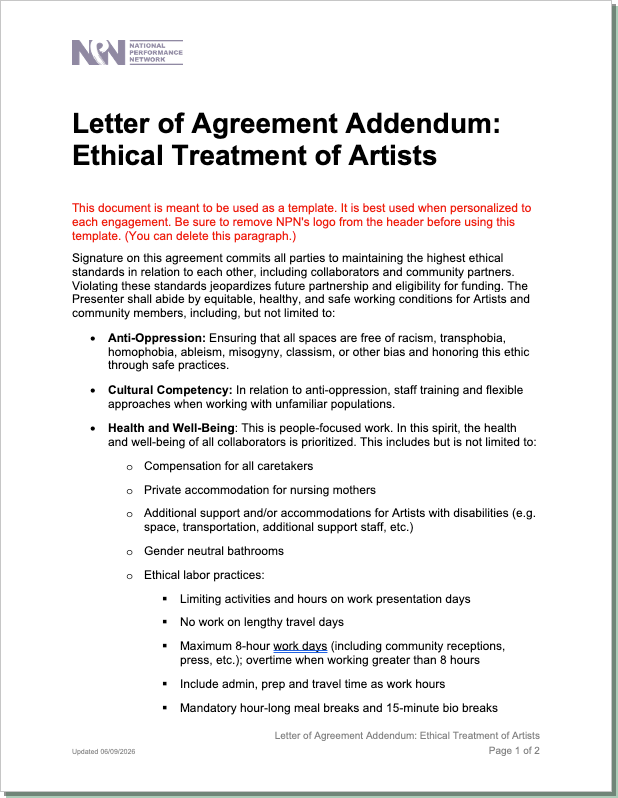
This rider asks NPN Partners to “maintain the highest ethical standards in relation to artists and community partners” and includes clauses designed to guarantee presenting organizations abide by equitable, healthy, and safe working conditions for artists and community members. For example, presenters agree to provide additional support and accommodations for artists with disabilities, cultural competency training for their staff when working with communities with whom they are unfamiliar, marketing and promotion that centers the artist’s voice, full budgetary transparency when using the artist’s name for funding opportunities, and more.
What Happens When the Rider is Violated
NPN’s ethical treatment rider is important because “there are structural inequities built into the hierarchical capitalist society we live within that often result in artists having less power in their relationships with co-commissioners,” Brevé says. “We know that conflict is inevitable, but we also know that we can create restorative processes, and honor our collective responsibility to the livelihood of artists by setting clear standards for our Partner organizations and co-commissioners.”
When the relationship between this Creation & Development Fund artist and their co-commissioner broke down due to ongoing conflicts about budget and credit, the artist was asked to consider dropping out of the project, and they felt powerless:
“I was already super broke from not having the money that I thought I would have from this grant. I hadn’t been able to pay my rent for months. And now they were suggesting I shouldn’t perform. I realized I wouldn’t get my artist fee, that I would be the least compensated of anyone involved, and I started crying during the meeting. I didn’t know what to do, but my project manager was there with me. Afterwards my project manager told me we should reach out to NPN, so that they could mediate.”
Brevé, who is a trained mediator, met with the artist’s project manager, alongside representatives from the artist’s other co-commissioners to assess the situation. She ultimately determined the co-commissioner had violated the institutional transparency clause included in the ethical treatment rider and used that provision as leverage during negotiations.
The Right to Move On
Brevé, the project director, and the other co-commissioners made sure the artist didn’t have to navigate this scenario alone. Eventually, the artist withdrew from the co-commissioner’s production, but on their own terms. They were paid back $20,000 by this co-commissioner, including what the artist had paid their other collaborators. While NPN knows our ethical treatment rider cannot prevent every conflict between artists and presenters, it offered a framework of principled practices and mutual trust to move through this incident, protecting the artist’s well-being and modeling good relationships.
This artist continued to develop a reimagined, fully realized version of their performance that later premiered at one of NPN’s National Partner organizations. The project has traveled across the country and has since been nominated for a number of awards, including one that will bring the artist abroad, where they will present the performance to curators and presenters from around the world.
“Without NPN, without Stanlyn, my project director, and NPN’s Partner organizations, I would have given up creative control and experienced a serious financial blow. But they supported me, supported my vision, so that it could come to fruition,” says the artist.
Call to Action
NPN continues to learn and adapt our work to transform the conditions that shape artists’ material realities—from our contracts and other tools, to our advocacy across the arts and philanthropy sectors, to our National Partner network as a community of practice. We know the ethical treatment rider will continue to evolve as we test new practices, and we affirm the urgency of prioritizing artists’ care at a time when artists and their voices are threatened. Lastly, we invite our colleagues to engage in this work alongside us.
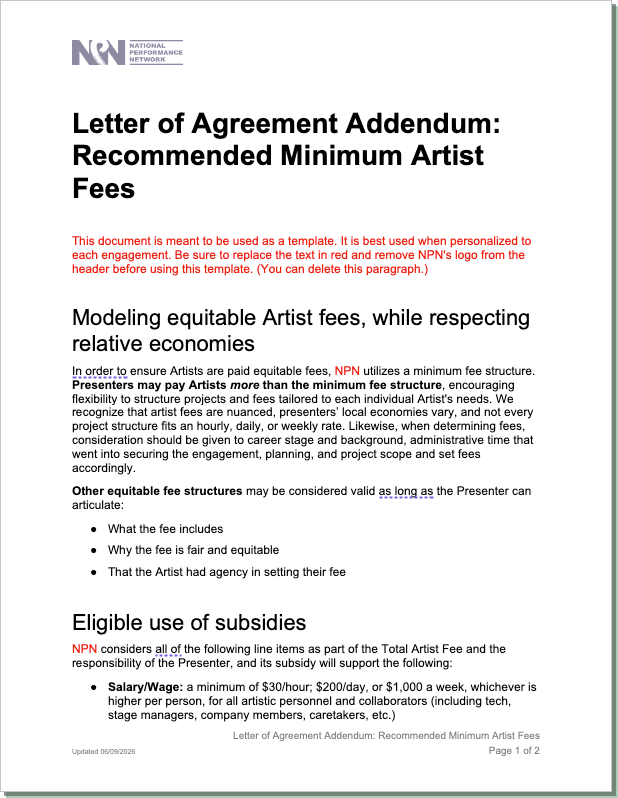
At the end of this post are examples of addendums often included with our contracts, including the ethical treatment rider, as well as our “Recommended Minimum Artists Fees” agreement. We encourage folks to share these tools and to copy and adapt them to their own values and needs.
Downloadable Templates
About Riley Yaxley
Riley Yaxley (she/her) is most frequently a dinner party host, a fishkeeper, a homebody, a beach rat, a wallflower, a professional email sender, a progeny of “Midwestern Nice,” a dance hobbyist, a flâneuse (if such a thing is possible), a glutton, an errant daughter who forgets to call her mom, a shameless navel gazer; and sometimes, she is also an essayist, editor, and nonprofit fundraiser.
The middle child of seven, Riley was born and raised in a Detroit suburb and currently lives in Chicago on the stolen land of the Ojibwe, Potawatomi, and Odawa peoples. She earned her BA and MA in Writing, Rhetoric and Discourse from DePaul University.
