
“Preservation Through Storytelling”
An Interview with Take Notice Fund Artist Zandashé Brown
• 12 minute read
NPN’s Take Notice Fund has been supporting the creative practice and wellbeing of BIPOC artists in Louisiana since 2021. To bring more visibility to Louisiana’s artists of color, NPN asked past Take Notice Fund awardees to talk with us about their work and careers.
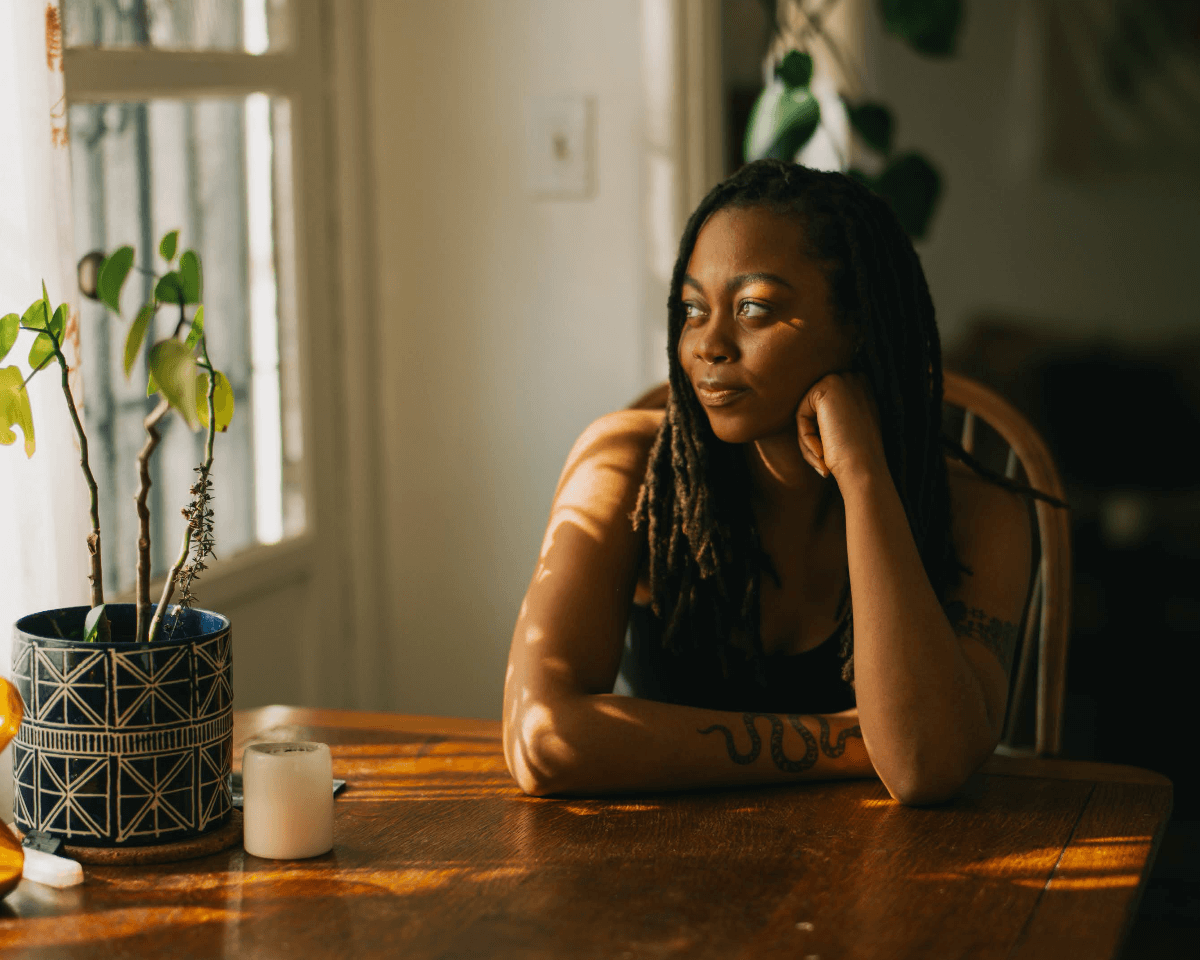
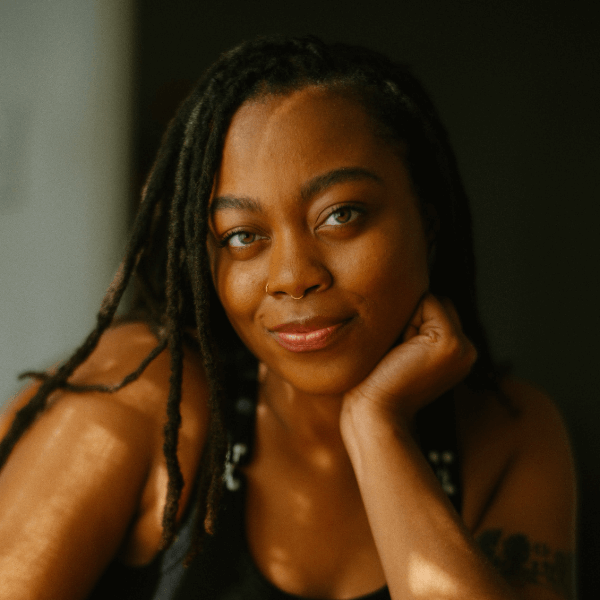
Zandashé Brown, a 2023 Take Notice Fund grantee and one of Filmmaker Magazine’s “25 New Faces of Film 2022,” is a writer and filmmaker from Rosedale, Louisiana, whose work explores Black life in the American South through the lens of Southern Gothic horror. In this interview, Zandashé talks about growing up in a culture of storytelling and how she explores her own experiences through her work.
This interview was recorded in 2024. In January 2026, Zandashé was in residence with ArtYard in Frenchtown, NJ, to develop her feature screenplay, The Matriarch.
This interview has been edited for clarity and length.
NPN:
How would you describe your work to someone who is unfamiliar with it?

Zandashé:
The working phrase that I’ve been using is I make Black Southern Gothic horror. I borrow a lot of the themes from the Southern Gothic literary genre. I’m really interested in these themes that are attached to the landscape of southern Louisiana, where I come from, of death, decay, sex, shame, secrecy, tradition.
My work is kind of at the intersection of horror, psychology, and spirituality, and the experience of living in the Black South.
NPN:
What drew you to these particular themes?
Zandashé:
I grew up in a small town, literally a village, in Louisiana called Rosedale. A very small population, very rural setting. Storytelling and folklore was such a core part of my childhood and forms my identity. You know, just oral tradition, real or fake stories about what happened in the places that are around you. There’s [so much] history — the trees and the houses have been there for a long time.
I’ve always been in love with Louisiana. Culturally, especially. I’ve always craved stories [with] accurate representations of my home. Take these tropes of voodoo or spirituality, which I’ve come to understand as sacred traditions. I want offer back into our media portrayals of them [as sacred], even as a horror director.
I think there’s so many different ways to tap into psychological fear, especially for people in the Black South who have had this lineage of terror passed down. It is in our bodies. And so I really want to explore that. As a country I feel like there’s a reckoning with our past that happens through southern Gothic film that I really want to be a part of.
And then in another sense, I’m thinking more and more about climate change and the loss of the coast and how Louisiana is disappearing. All of these things that have been precious to me that I want to preserve.
It will be the responsibility of culture bearers and artists to archive these stories in some way when the land is eventually gone. So that’s something that’s always in the back of my mind when I’m writing and directing, and especially in the work that I’ve been doing lately. Just some form of preservation through storytelling.
There’s something about New Orleans, but I think it extends to other parts of Louisiana, where people feel kind of spiritually drawn to it. They feel like they were called to a place, or have described it as a portal.
I recently relocated to California for a bit to move my feature film into development and it’s been interesting to witness [New Orleans] from the outside. Being out of it, I see it even more now as a sort of portal or a womb space.
I don’t know. I’ve been trying to express the kind of denseness of what it feels to live in a place that feels so timeless. You know, New Orleans has these above ground cemeteries — it’s like the dead and the past is always around us in a way that you don’t get in other places, and that influences the people that live there. It’s like it’s in the humidity.
NPN:
What does your creative process look like?
Zandashé:
I’m a very curious person. I’m curious about myself, and I’m curious about the world around me. What I find usually is the thing that I’m obsessing the most over is the thing that I need to create work about. So I follow it intuitively. And even if I shift stories and look at something else, I notice that the themes are the same. They cross over.
Right now I’ve been really interested in this idea of New Orleans or Louisiana being a womb space, and land in general having different energetic presences. California feels very different [from Louisiana], you know? I guess I’ve been trying to preemptively work through the grief of home being lost, on a land level and on a cultural level. So that’s showing up in a lot of things that I write, this idea of transformation, and death and rebirth.
A lot of my creative practice just comes from having a bit of a spiritual practice, and a daily practice of reflection and journaling. It’s been a little trickier lately because I’ve been in a period of transition, but typically, I like to wake up and make a hot drink, do like three morning pages or journal for 30 minutes or so, and sit and meditate at my ancestral alter.
And then, I feel like a really important part of the creativity is just working with muses and with things beyond myself. I feel like the ideas are very abundant and around me, and my job is to make myself still enough to receive.
Which can be tricky. So I try to take on those practices of meditation and just taking good care of myself on an emotional and physical level so that that flow can happen.
NPN:
That’s come up in a couple of our conversations with artists — being excited about the work, but also needing to make space for rest in order for the work to be possible.
Zandashé:
Yeah, or it’ll leave you. I had to learn that the hard way. I think maybe it wouldn’t have taken me as long as it has to write this feature. Because my motto used to be, “It’ll get done, because it has to.” I would [set] an arbitrary deadline, and then I would just break myself to reach it.
Yeah, that doesn’t work. And other writers have told me it’s not really up to you. These things have a timeline of their own and you just have to listen. So yeah, I try to make more room.
NPN:
What do you want audiences to walk away with after interacting with your work?
Zandashé:
I want to bring people to a level of deep introspection. I want to shine a light on like the things that people try to hide about themselves, or on a communal level.
I think it’s important and healthy to explore our fears, and a lot of people are really resistant to that. For good reason because it’s difficult, but I think it’s so rewarding and so much healing can come out of it. And that’s why I do horror specifically. You know, I want it to be a cathartic experience for the audience.
I want it to be a sort of vessel for healing. I truly do believe that there are things inside of us that we ignore that really need our attention. And so I’m trying to aid in giving those things attention.
That’s where I pull in the southern gothic angle into the horror because I think, you know, it’s easy for horror to kind of just end on either a grim note or, you know, they made it away from the villain. But I like this sort of bittersweetness of being able to hold nuance, hold both love and loss. So that’s what I go for when I’m writing.
Benediction, written and directed by Zandashé Brown.
NPN:
You’ve talked about growing up immersed in a culture of storytelling, and wanting to tell stories of your own. What led you to pursue film as your medium for telling stories?
Zandashé:
I’ve always been a writer, I’ll say that. As a kid, I would write these little stories in between assignments, and draw a cover, and staple them together, and pass them around. And for a long time I thought I wanted to be a novelist. Then in high school I joined film club, and dots started to connect.
My mom and I watched a lot of movies together. She also kind of raised me on horror. You know, we would go to Blockbuster and she would get a horror film and an action film, and I’d get a cartoon. And I would watch the horror film with her. So it’s always kind of been my lens. But as far as when I started making it myself, um, I don’t know. I think there just, I, there was no real objection.
I had a lot of tricky family stuff going on around the time that I went into college, which is kind of all being unpacked in the feature that I’m writing now, The Matriarch. My mom had a battle of psychosis that lasted for like six years, and so from the end of my high school years into my early college years, we didn’t really have contact.
And so I kind of did a lot of things very independently. And when it was time to choose a major, I was like, I don’t know. I’d been in this film club, and I was really in love with it. I started applying to some initiatives outside of school, and I got into a filmmaker lab with New Orleans Film Society called Emerging Voices.
For the past two years I’ve actually managed [Emerging Voices], which has been a nice full circle. And I think it was just so affirming to have gotten selected for something like that.
I made my first short film some time after that, Blood Runs Down, and it also opened some doors. I made that film about the experience of not having my mom in my life and just kind of processing trauma and memory, and how I was understanding my own memory changing. And those themes were resonating with a lot of people in ways that I hadn’t expected them to.
Since then I’ve kind of straddled the line between artist and arts administrator. I’ve been a programmer with New Orleans Film Festival since 2019. I’ve also been writing and directing.
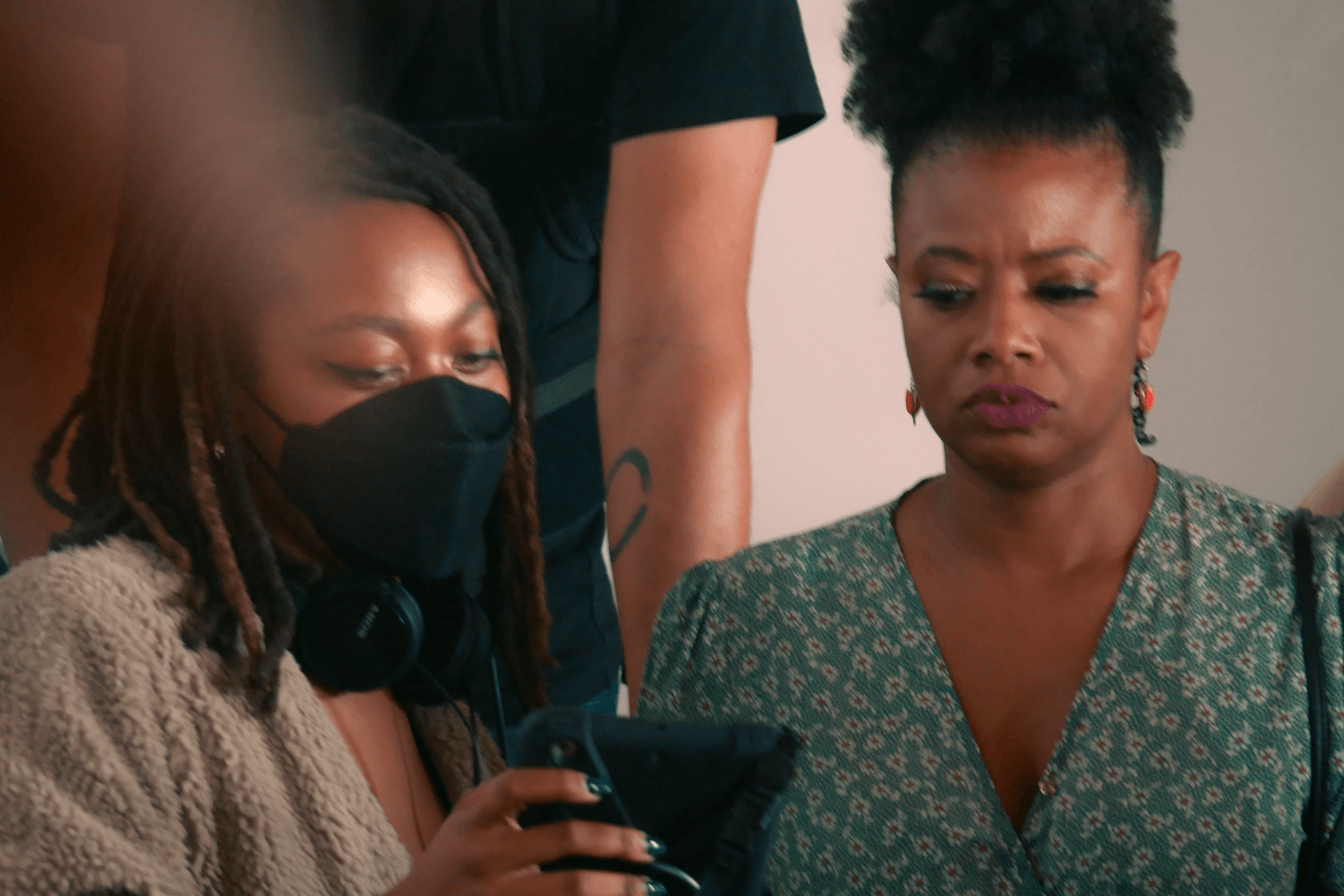
In 2021, I got into another lab for my short film Benediction, which opened some doors, and then got into the Sundance Directors Lab in 2022 for the feature [The Matriarch]. And so I’ve just been really fortunate to have a reason to keep creating as I’ve done the artist administrative work. Because it’s hard to do both.
NPN:
Are there any specific people you feel have been influential in your art?
Zandashé:
I don’t think in my family, film is considered a thing that you do, you know, but there also wasn’t resistance. Over the years they’ve been huge cheerleaders. And I’ve had some great mentors over the years through different programs.
But it in terms of influences, Eve’s Bayou is such a seminal film. And Kasi Lemmons — I feel like she really nailed it with that bit of Louisiana culture from that era. That has been a reference for a lot of work.
I’ve gotten a lot of inspiration from the way that Toni Morrison writes. I consider her a horror writer. You know, she tonally just — to read her books, I have to take frequent pauses to digest them. And that’s the same thing that I’d like to be able to do with cinema. Octavia Butler has been a huge influence.
But outside of other artists, I think I’m very influenced by the women in my family. The men were around, you know, but I was raised by my mom, my grandmother, my aunts and great aunts. And I just find them really captivating. I could tell stories about them for years and years and years. Their presence has been a big influence for me, [and I see] myself in them.
NPN:
Who do you consider your community, and what or where is home for you?
Zandashé:
I’ve had such a great community of creatives and filmmakers in New Orleans that I still consider a huge part of my community, you know, no matter where I am.
Louisiana will always be home. Home for me is Iberville Parish, but New Orleans is also home. It can be a little tricky sometimes going back to home [as in] where I’m from, but the second I touch down in New Orleans, I feel very held.
I’ll always have a commitment to [New Orleans] and the culture bearers, the preservationists, the filmmakers, the musicians there. I consider them my community even when I’m not in the midst of them.
But it’s expanding now to a community of artists and filmmakers around the world. After going to a number of film festivals and seeing the same faces time and time again, you really start to deepen these relationships. And the folks that I’ve felt the closest to, I would say what they have in common is they also care about the places that they come from.
And so I’ve found community with a group of Miami filmmakers, with folks in New York, with folks from different parts of the Caribbean. And we have shared themes of loss of land, loss of culture, and we’ve been able to aid each other and kind of hold each other through that change.
NPN:
What are you reading, watching, or listening to lately?
Zandashé:
I’m programming right now, so I’m watching a bunch of film submissions. I’m about to watch like 10 films after this.
I’ve been reading Anaïs Nin because I’ve never read her before. I want to read the diaries of artists more [to see] how people have done this work before. But before I read her diary, I’ve been reading her books, and she was, she wrote a lot of short erotica. I’ve never read erotica before, so that’s new. I’m reading Delta of Venus, and I’m reading a lot of different short stories across different books.
I’m listening to a lot of techno, a lot ghetto house, a lot of high energy music.
I think what’s happening is I’ve been in a very, I don’t know, a very deep, introspective, woo woo, spiritual head space for what I’ve been writing. And I’m slowly transitioning into things that explore being of the body more than of the mind and spirit. So, I’m very into dance music right now, very into anything movement related or around sensuality.
NPN:
Last question: what is something people would be surprised to learn about you?
Zandashé:
I think because of the tone of my work, a lot of people before they meet me think I’m very intense and serious. Which, I can be intense, I take things very seriously, but I also do not take things very seriously. So I think my sense of humor comes across as a surprise to a lot of people.
I don’t know. I feel like it makes sense to me. It’s a good balance.
About Zandashé Brown
Zandashé Brown is a storyteller and writer/director born-and-bred in and inspired by southern Louisiana. As a daughter of the abandoned American South, she blends Black Southern introspection and spirituality with surrealistic horror to tell stories about neglected places and peoples. She is a 2025 SFFilm Rainin Grant Recipient, an alum of the 2024 Film Independent Amplifier fellowship and the 2022 Sundance Screenwriters Lab and Directors Lab for her debut feature-in-development, THE MATRIARCH, and of the 2021 Tribeca Chanel Women’s Filmmaker Program. She was named one of Filmmaker Magazine’s 25 New Faces of Independent Film for 2022. You can watch Zandashés short films here.
Related Stories
Newsletter Sign Up
Get the latest on events, stories, opportunities, and projects from across the network.
Your personal data will be managed respectfully and responsibly, in accordance with our privacy policy.