
“The work is an archive of my communities, my journeys.”
An Interview with Take Notice Fund Artist Melanie Greene
• 15 minute read
NPN’s Take Notice Fund has been supporting the creative practice and wellbeing of BIPOC artists in Louisiana since 2021. To bring more visibility to Louisiana’s artists of color, NPN asked past Take Notice Fund awardees to talk with us about their work and careers.
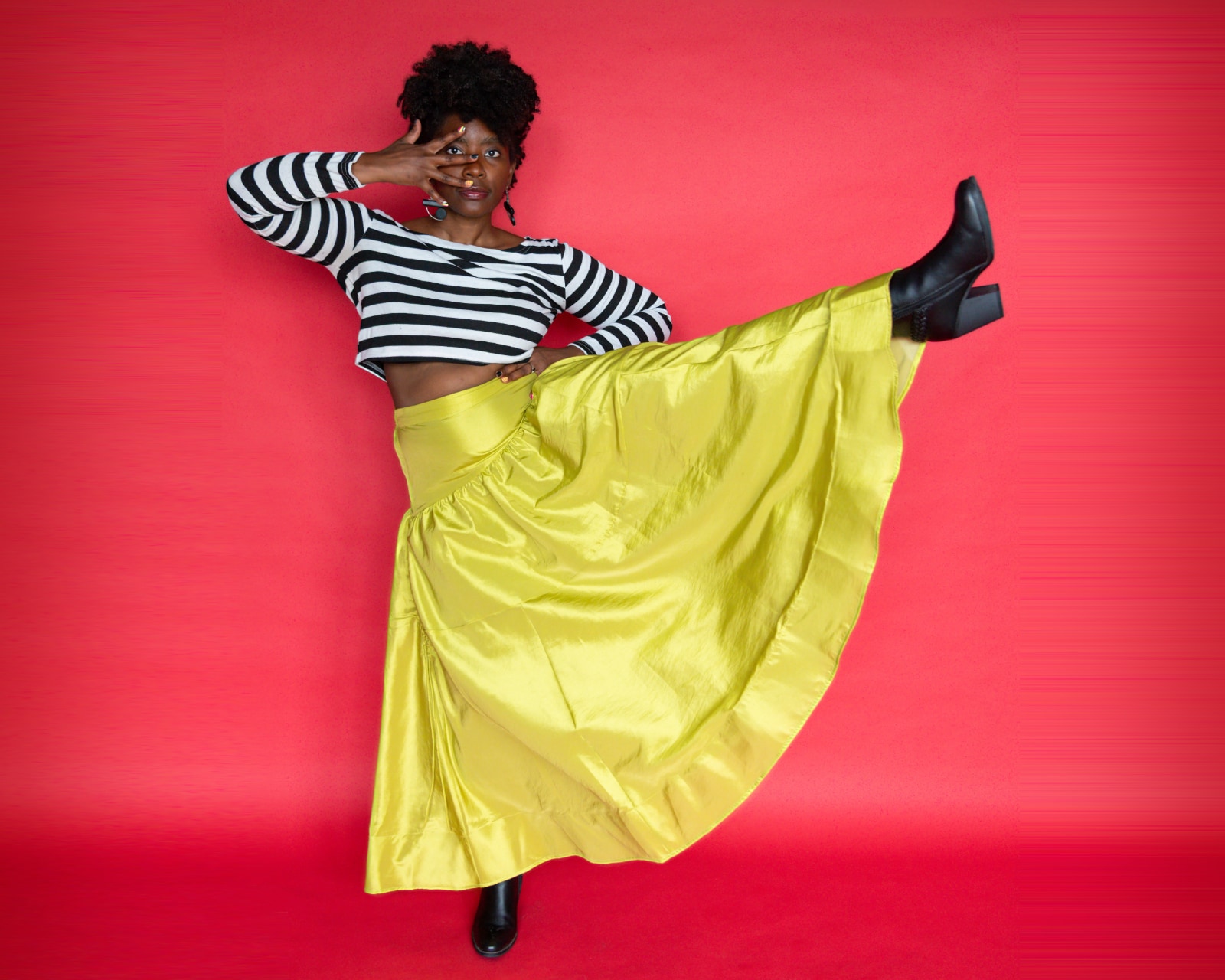
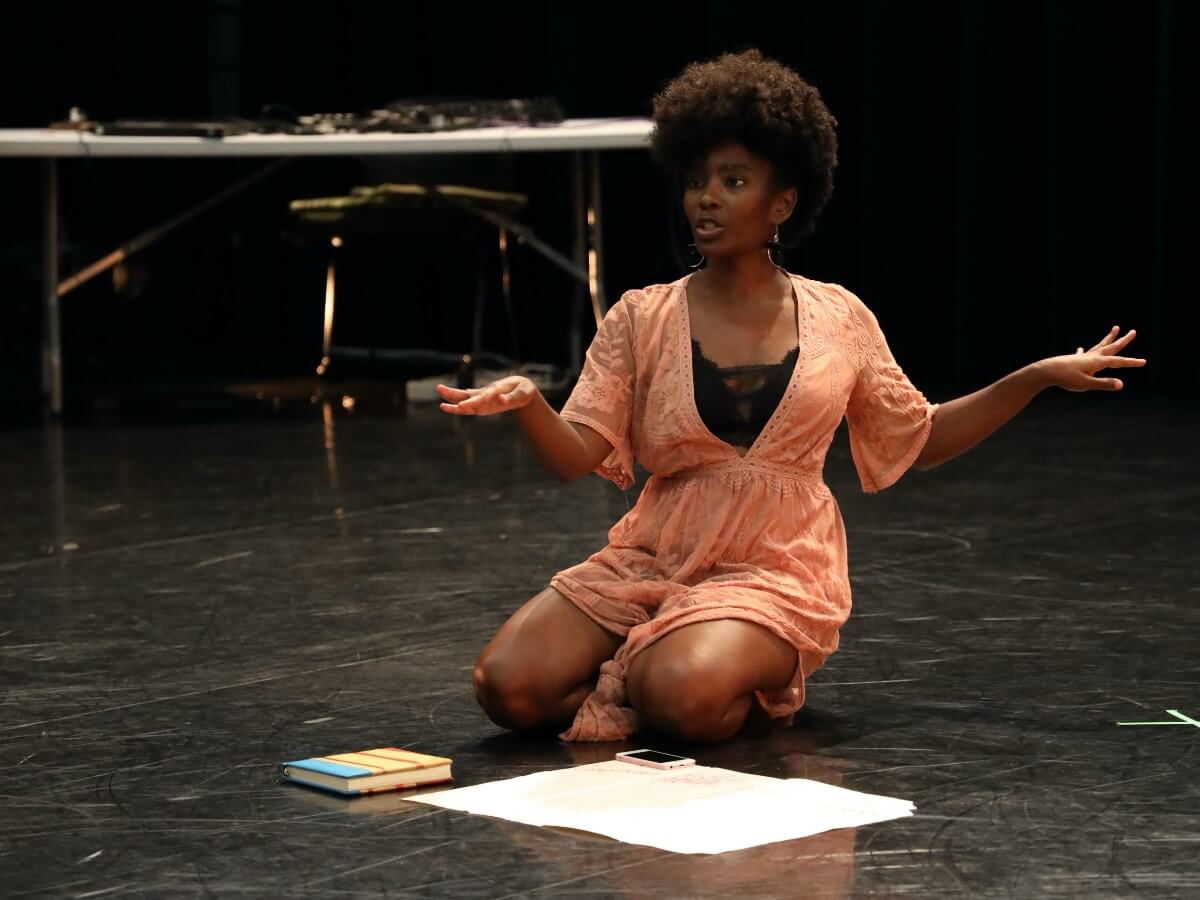
Melanie Greene, a 2021 Take Notice Fund grantee, is a movement-based artist from New Orleans, LA, who uses the concept of a time traveler named Sapphire to explore and celebrate Black women’s bodies. In this interview, Melanie talks to NPN about why she created Sapphire, and how she layers her performances to connect with audiences from a variety of backgrounds.
This interview, which was recorded in 2024, has been edited for clarity and length.
NPN:
How would you describe your work to someone who is unfamiliar with it?


Melanie Greene:
My work is Afrofuturistic, movement-based fantasy, and also reality that’s inspired by dance. But it’s actually flowing into different worlds at this point, and I’m allowing it.
NPN:
What has drawn you to what you’re doing now?
Melanie:
So the main work that I had the amazing support for with NPN, is my work Sapphire. And it’s about a time traveling golden goddess who moves through moments that police and celebrate Black women’s bodies, and our experiences and our essence. And it plays with a lot of different themes. It turns things on their heads.
The seed of this idea started at a conference at Duke University, the Collegium of African Diaspora Dance (CADD) dance conference, where I was really interested in my journey as a maker. And at that time, I had just moved to New York and so I was immersing myself in a lot of downtown dance. And I was seeing a lot of nudity, and it was a lot of nudity performed by predominantly white women and queer men.
And I was curious, where were the folks that looked like me doing that work, and who felt like they had that same audacity, that same intentionality inside of their creative research, but also the safety? Like, how do you feel safe enough to explore form as nudity inside of performance spaces?
And so that was sort of the thesis, that was the beginning of the question. And because I come from a very religious and conservative background in North Carolina, I started to think, how could I approach this safely and in a way that felt that it was pushing my boundaries and getting me to think critically about the work that I was making, but then also had some form of safety with it?
I started to do a lot of research about identities of Black women in American television. And there was the spectrum of, you know, like early 1900s, you would see this mammy character, you would see this, uh, Jezebel character. And then around the seventies, you started to see this Sapphire character who was very sharp tongued, very witty. She did a lot of emasculating of men. She was just so, like, on her shit.
So I was like, oof, I wanna take this idea of nudity and form, and what it means to Black women, and I want to use this character as a catapult for that, because she’s strong, she’s audacious, she’s unapologetic. And so through this I was able to build out the idea of Sapphire.
And it’s been growing over the years, which I’m really grateful for. It keeps asking me questions and it keeps speaking to me. And every time I perform it in a different location, I allow that space also to inform what that journey is.
NPN:
How did Afrofuturism become a part of Sapphire?
Melanie:
I was fascinated in what it means for Black women to see ourselves in the future and to see our survival, I started to look at Afrofuturism and to sort of dream and imagine, what if?
And so I was like, okay, I’m gonna create a character who’s coming from our future, so we know there is a future. We don’t know how we get there, but we know that there is one.
She’s coming back to her past with our future and also our present. She’s coming to our present to get information on how she got to where she is. Does that make sense? It’s a non-linear, yet linear sort of investigation of what it means to survive and thrive and understand the history and the lineage of where you came from, and how you then use that to catapult yourself into envisioning what you actually wanna live and exist in and celebrate.
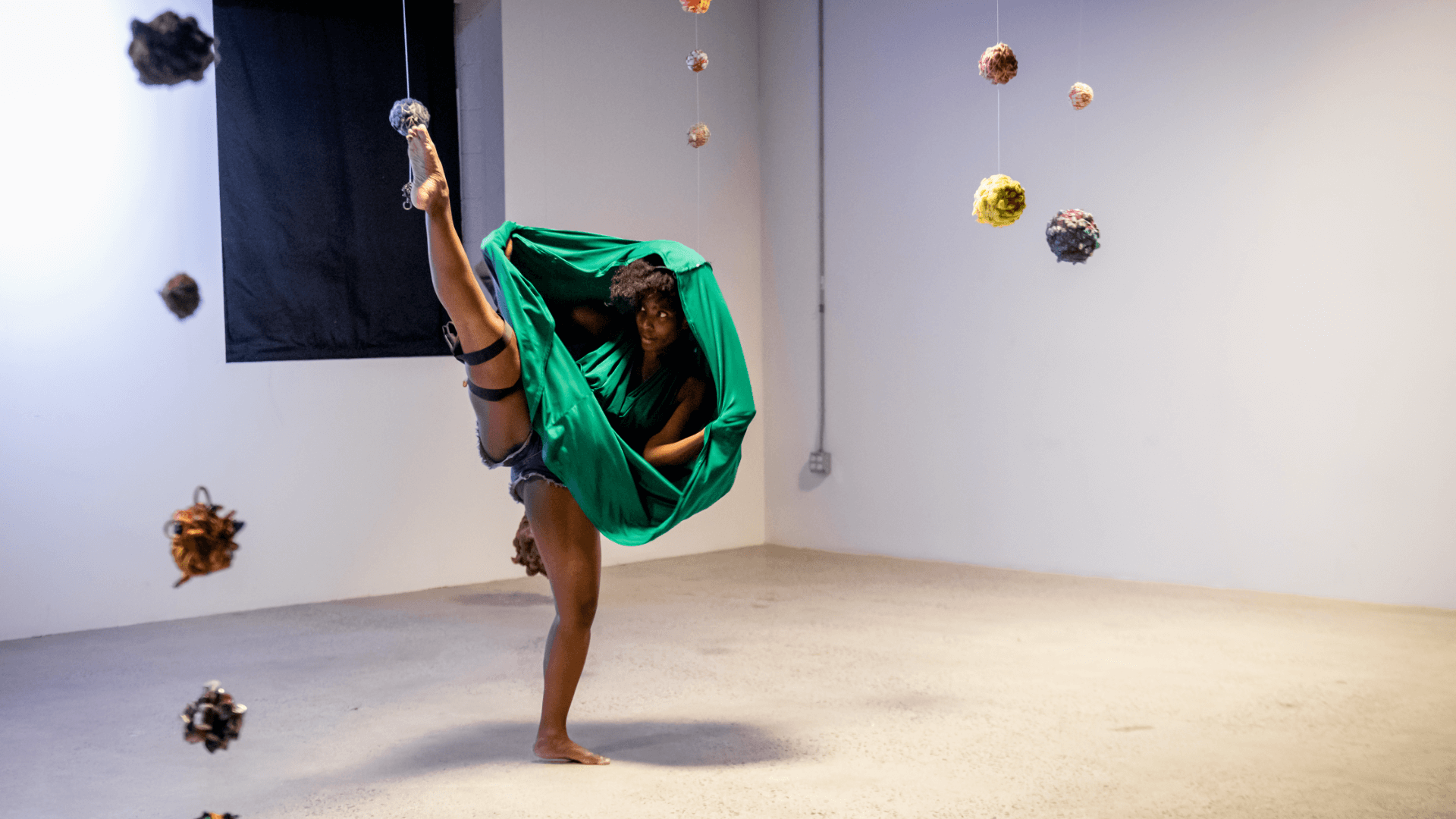
So that’s how it all sort of began. And since then, I have a performance component and a film component, and then a graphic novel series for Sapphire. So she has multiple angles to explore these things.
NPN:
What is your current creative process and how has it evolved over time?
Melanie:
My process depends on what I’m working on. Sometimes the seed is a research idea, sometimes the seed is music, and sometimes the seed is just a spontaneous inspiration.
What’s been really incredible about Sapphire is that every time I’ve worked inside of that work, the process has been different. For instance, I had a residency once in Italy, and there was no expectation to perform or present anything, so I was really able to, for that process, just delve into the research component of the work.
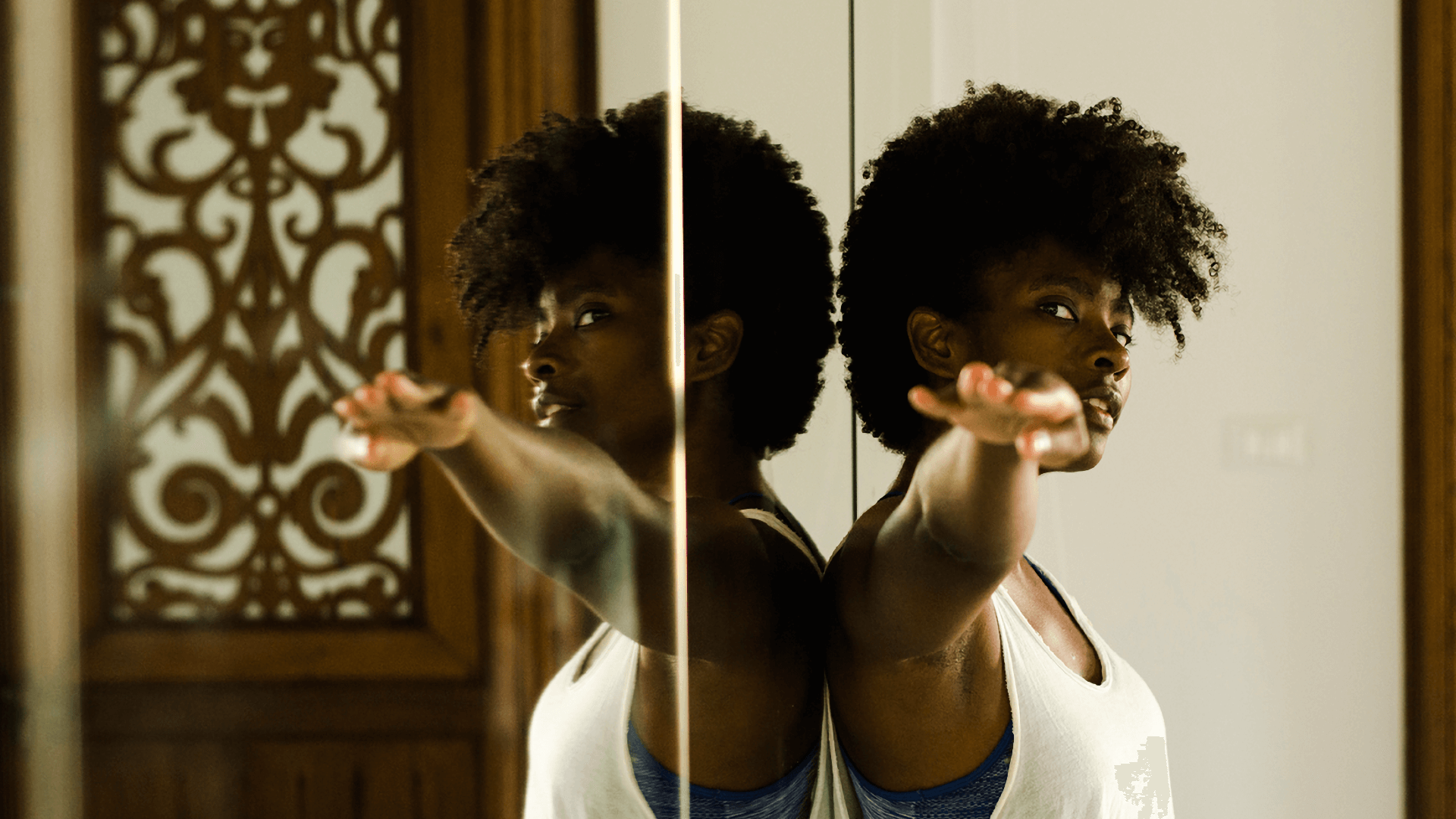
I also like to think of performance as research. That is huge for me in my process. I build a scaffolding of what I want a performance to do, and where I want it to go, and what the pace and the framework is. But often what happens is that inside of the performance, I start to get a lot of information, because part of it is seeing faces, right? Sapphire really needs to see and feel and be with people in real time. So that’s part of the process too, of feeling people’s energy, being kinesthetically aware, and allowing that sort of knowledge as a movement-based artist, as a dancer, to inform how the work is developing.
And then what happens is after the performance, I have a ton of new ideas and all this information.
NPN:
What is the conversation that you want to spark or the impact that you want to have for your audience?
Melanie:
I hesitate to answer because I feel like I am in a process of trying to explore being a little bit more open in what is available to people, because I understand that when you come to see a show, everyone’s coming from different places and parts of their journey, and with different information.
And so one of the things that I do for Sapphire is I like to create layers where, you know, there’s some references only Black aunties will get, there’s some references that are for people my age. The dialogue can be different if you feel like you’re an accomplice or an ally to Black feminist rights versus if you don’t, and there’s something in the form that you can see and pull from it. So there’s just a lot of different things that I want people to see depending on where they are. And two people sitting beside each other may come away with two completely different things, which also informs the work for me.
For the film, we filled [Sapphire’s] bathtub up with Mardi Gras beads. My New York friends saw jewels, like, “Cool, she’s bathing in opulence and lusciousness and she’s enjoying it.” My New Orleans folks saw Mardi Gras beads, so they were like, “Oh, she’s bathing in the history and the information of what this festival means.” And other people just saw her bathing.
NPN:
It makes sense too with what you were saying about how your performance changes based on where you are or what you’re feeling from the audience.
Melanie:
I will say that I’m very clear about the intentionality of what I’m creating. So it’s not a free for all, like, oh, get anything you want from it. There are different touch points that people can pull from depending on what their experience is.
For instance my family, like I said, is extremely conservative. So they’re like, “We’re not coming to see this work, Melanie, because you’re predominantly nude.” So this is why I then created the film and also the graphic novel series, for people who are uncomfortable with nudity to also still get some of the themes and ideas of the work, but in a way that they’re more comfortable.
NPN:
It’s very much meeting people where they are. “This is a conversation worth having even if you’re uncomfortable with some element of it, so here’s a different avenue for us to have this exploration together.”
Melanie:
And also, “The reason why you feel that way is why I’m creating the piece, so fantastic.”
NPN:
What got you involved with the work you’re doing now? What was your path?
Melanie:
This is a long journey, and it’s ongoing, and I’m still figuring things out.
But I feel like I’ve always been a creative. When I was really young, I created dinner shows at home. I would use my sister as a another performer. I would make a ham and cheese sandwich, ’cause I couldn’t cook. And then when my mom got home, she got a ticket and she would sit in the living room and then we would put on these shows for her. So it’s always been a part of my journey and who I am.
When I went to college, my parents asked me to focus on something that was more marketable, because they didn’t really understand how you make this type of life sustainable, which I’m still trying to figure out.
So I got an undergrad degree in marketing, which obviously plays a huge role in being an artist now because as we know, how you talk about your work and yourself is super important. So it came in handy, but still it felt like a bit of a detour.
And then I eventually went back and got a master’s in dance, because I was at an ad agency and slowly dying inside. Like I would go in the bathroom and dance. It was tough. So I found my way back into the dance world.
And then I moved to New York, and was doing what a lot of us do, which is working admin gigs, so working in marketing while performing at night, and doing residencies and trying to figure that sort of life out, and just constantly having to negotiate, when finally I was like, all right, well, I didn’t come to New York to be a marketing communication manager. I’m good at it. It works. But it’s not what I came here to do.
And so I left that to go full-time into performing. It was amazing.
And then COVID happened. It’s so funny when you finally decide to take that leap and trust that which your gut says yes to, and that which you love, that something comes in and sort of spins you in a loop a little bit.
And so since then I have been trying to find my way back to it. But I also have to acknowledge that I am still working on some past… trauma, for lack of a better word, of not trusting my skill, not trusting the work that I am passionate about, what I wanna do. And I still find myself doing these other gigs, these side things, these administrative things that are taking a lot of creative resources from myself because they’re full-time jobs.
So now I’m just, and my partner put it great today, which was like being insecure about your ability to sustain yourself with this work. And I didn’t realize I was still holding and carrying that from maybe two decades ago when I was told, “Hey, you might not be able to be a sustainable artist, so do this.”
And I’m like, shit. I’m still sort of piecing through that and what that means, and then trying to be kind to myself and not upset for all the time that I feel like I quote unquote lost, not trusting myself.
NPN:
A lot of artists probably recognize that struggle between the internalized worrier that says, “It’s great that you want to do that, but is it sustainable?” and the inner voice that responds, I can trust in what I have to say, because it’s valuable in the world.
Melanie:
That’s where we are now in the journey. We’re back to sort of what is it that I wanna do now and how do I wanna do it? How does it look different than when I was 30 in New York?
NPN:
What do you feel has been the greatest influence in putting you back on the path towards your creative self and your work?
Melanie:
I think it’s every time I have conversations like this. I used to be on a podcast called The Dance Union with a friend and collaborator, and every time I’d be in spaces talking about dance, or I’m on a panel, or we’re curating or doing a show, I would see how much it fed my soul. I was like, oh, this is it. I at some point stop questioning it and trust and allow that to sort of guide [me] instead of overthinking it in a way that, as another friend mentioned last week, takes away the magic that makes the things that we do possible.
So every time I’m able to ground myself back in my practice and talk to other artists wrestling with the same ideas, I’m reminded of like, oh, this is what you wanna do.
NPN:
I think that connects nicely to the next question. Who do you identify as your community, and what does home mean for you?
Melanie:
I’ll say community is the family, the friends, the artists, the not-artists, that I am interested to be around and I feed and who feed me on a regular basis.
And so I have a lot of different [communities]. I have a puppy, and so now I have a dog park community. I have my real estate community. I have my neighborhood community. And what’s even better, especially in New Orleans, is when all of a sudden they start to intersect, like when I was helping to curate the International Dance Festival here in the city and I saw someone from the dog park.
That’s what I love about community — I don’t have to silo myself in one. I’m at the intersection of many, and so “community” is a lot of different things.
And then home, hmm… I have many homes. I just recently got back from France and I feel that maybe in my past life I was a traveler or something.
So I’m starting to unpack what home actually means, because I have a lot of different homes and I think that’s okay. At one point in my life, I felt like I was asked to choose one. No one asked me to do that, but it was just something that felt like was being imposed. But now I feel like home is a lot of places, and it’s also with the people who are in my community and who I love.
So my home is wherever the people are, and right now that happens to be multiple places. And so if we can get on how to teleport, that would be amazing.
NPN:
How do you think these different homes and communities have influenced or informed your work?
Melanie:
Oh my God, great question. I love it.
So when I first started building Sapphire, there was a lot of North Carolina in there, because that’s where I was born. And it was funny because when I was in North Carolina I thought it was so boring and I was so uninterested. But the moment I left it, I realized how unique and special it is. And so a lot of North Carolina shows up in Sapphire in the beginning.
And now that I’ve moved to New Orleans, I see a lot of Brooklyn in there, which I’m so grateful for.
And then when I went into making the film I started to incorporate elements of New Orleans into the work, because again, everywhere she goes, it becomes a part of the tapestry of the narrative.
The work is such a beautiful archive of my home places, of my communities, and my journeys.
NPN:
What are some of the things that you’re reading or watching or thinking about lately?
Melanie:
I am coming out of what I call artistic winter, because there were a lot of things on my plate and then there was nothing on my plate. And rather than get discouraged and depressed about it, I said it’s intentional. So while inside of this artistic winter, I have been playing this game “Homescape” on my phone. It’s a puzzle game and I’m on like level 9,070 or something ridiculous. It’s insane.
So I’m doing that, and part of my downtime is I love to watch Archer or Rick and Morty. Also I listen to The Read podcast.
I am trying to learn how to rest, because even when I have space to just be like, you’ve done all the things you can do at this moment, I always want to do something else. And so I’m in the process of trying to be good with that notion, which has been difficult.
NPN:
That makes me think of Tricia Hersey’s “REST IS RESISTANCE” framework and The Nap Ministry.
Melanie:
(Laughing.) I got the Nap Ministry flashcards so that I can tell myself that. But then I’m like, yeah, that’s cute, and I can think of 10 things right now I could be doing.
And then to sort of feed my soul, I read a lot of science fiction by Black female authors. [Right now I’m reading] one of N. K. Jemisin’s last books, called The Killing Moon. But I’m reading it very slow because I don’t want it to be over.
NPN:
You’re savoring it.
Melanie:
Yes, exactly.
I love the work of Wangechi Mutu. She’s a visual artist. I really love her work.
Oh, I like Guy Ritchie [movies]. What’s that about? I don’t know. But I do. I was telling my husband, like, what a gift that this person gets to basically explore very similar characters over and over again. He’s given the resources and the tools to do so.
That’s what a lot of artists wanna do – we wanna be able to have one idea, explore it in this way, explore it this other way, go deeper and go deeper. But a lot of times you get to explore one time. You have your show and you’re expected to go on to the next thing, but actually [for the artist] it’s like, that just opened up a whole can of worms.
About Melanie Greene
Melanie Greene, 2017 Bessie Award Recipient for Outstanding Performance with Skeleton Architecture, is a mischief maker (performer), content creator (choreographer), daytime dreamer (writer), and movement schemer (organizer). She is no stranger to swirling on the edge of impossible, swimming in the sea of the minority.
She has toured nationally and internationally as a performer and choreographer, and her creative practice has been supported by organizations including the National Performance Network, Brooklyn Arts Council, MANCC, and the Contemporary Arts Center New Orleans.
She was co-organizer of the Dance Union (featured in the New York Times) through 2023, and named among Dance Magazine’s: 2021 “25 to Watch”.
As an art and culture advocate, she’s had the pleasure to participate in Creative’s Rebuild New York (CRNY) Think Tank; The Field’s Artist Council; Dance/NYC’s Taskforce. Currently, As Director of Community Partnerships for the International Dance Festival New Orleans (IDFNOLA), Greene curates workshops, dialogues, and outreach initiatives that bridge local audiences with global artists.
This southern belle Brooklynite is rooting in the Big Easy and holding a special place for buttery biscuits, country ham, and collard greens. Stay Tuned.
Related Stories
Newsletter Sign Up
Get the latest on events, stories, opportunities, and projects from across the network.
Your personal data will be managed respectfully and responsibly, in accordance with our privacy policy.