
Reclaiming the Past, Reimagining the Future
Anna Beatrice Scott’s ART+FACT and the Power of Storytelling
By Carey Fountain
• 7 minute read
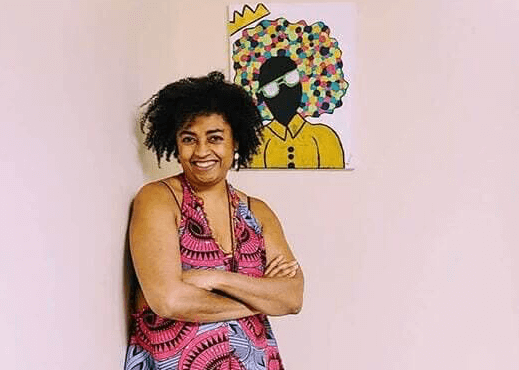
Southern Artists for Social Change awardee Carey Fountain writes about fellow awardee Anna Scott and her project ART+FACT, developed through the Earthseed Collective.
For Anna Beatrice Scott, community-driven storytelling is not only a vehicle for change—it’s a tool for reclaiming agency and healing trauma.
Her project ART+FACT, developed through the Earthseed Collective, offers a radical reimagining of the historical and cultural narrative of Holly Springs, Mississippi. By blending history, performance, and technology, Scott’s work seeks to shine a light on buried stories and reconnect a community with its past.
At the heart of ART+FACT is a performance-based interactive game that draws upon community narratives and local landmarks. The project encourages participants to explore Holly Springs as though they were treasure hunters, uncovering not just historical facts, but memories and untold stories from residents. “We want people to move through the town, experience the historical sites, and reshape the narrative, empowering those who have been left out of its story,” Scott explains. Researched by collective member Sheronda Gipson-Marion and Scott, the game is designed to be both educational and transformative, fostering inclusivity by highlighting the African American experience and shifting economic benefits to a more diverse group of community members.
The Genesis of ART+FACT
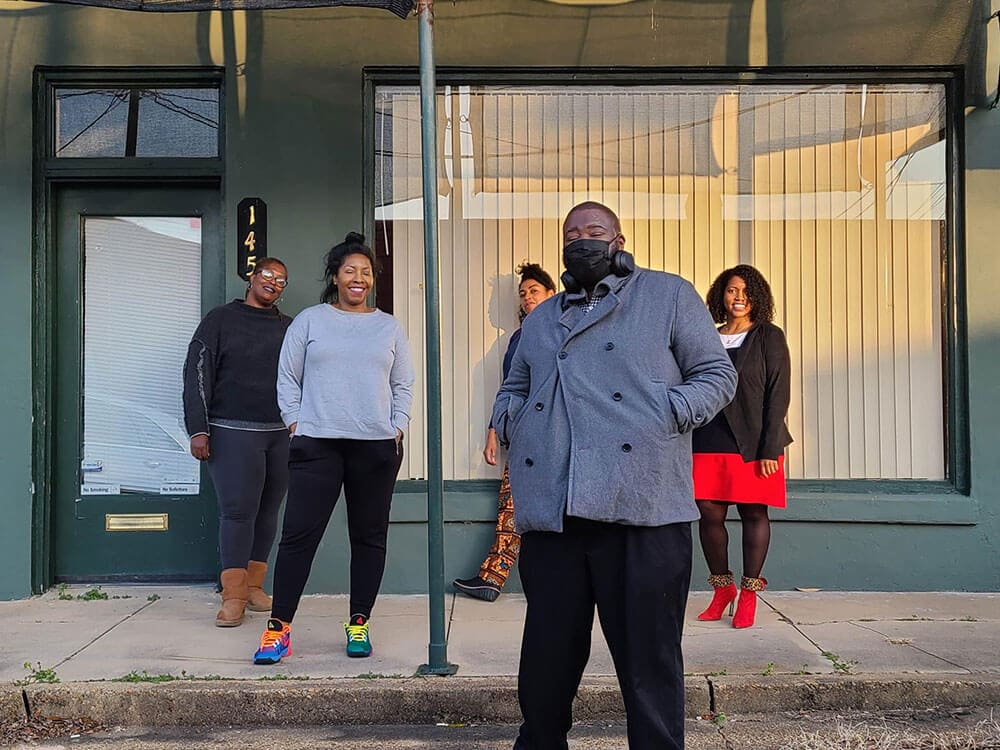
The idea for ART+FACT emerged from a series of deep-listening sessions led by the Earthseed Collective, in which Scott and her collaborators engaged with Holly Springs residents to uncover their visions and memories of the town. The community’s participation became central to the project, contributing both the stories and cultural touchstones that now form the foundation of the app’s interactive experiences. “We set up a tent at local festivals and asked people to share what they wanted to see in the future for the town. Those dreams became a part of our larger mission,” Scott recalls.
Yet, what started as a project about collective memory quickly turned into an exploration of historical erasure. Holly Springs did not fully integrate its schools until 1973, long after desegregation became federal law, and remnants of segregation continue to affect the town’s dynamics. Scott and her team encountered resistance as they uncovered sensitive histories, including a collection of photos from Mississippi’s Sovereignty Commission, a state-run organization that surveilled civil rights activists during the 1950s and 60s. “Our parents were in those pictures, at protests and meetings, and it was clear that the town wasn’t ready to fully confront its past,” says Scott.
As the project evolved, it became clear that the town’s architecture—antebellum homes, historical sites, and museums—told only part of the story. “There’s a pattern in Holly Springs where the white community has access to physical spaces and resources, and Black residents are left on the margins, with their stories often left untold,” Scott observes. ART+FACT seeks to disrupt that imbalance by providing an alternative narrative through performance and community-driven storytelling. By blending the physical environment with technology and oral history, the game allows users to experience Holly Springs as a living archive.
A Personal Connection to the Land
Scott’s personal journey is woven into every element of ART+FACT. A dancer and movement scholar, Scott has spent over 30 years studying and performing African Diaspora dance. Her passion for movement is inseparable from her own experience with Multiple Sclerosis (MS), which she describes as both a challenge and a source of creative insight. “MS forces me to slow down and really think about how we hold memory in the body,” she says. “It pushed me to think about how we can retrieve movement and stories from within.”
Her condition has also shaped how she views land and space. Growing up in rural Mississippi, her family’s land has been passed down for generations, and she’s keenly aware of the trauma tied to Black land ownership. “In our community, land isn’t just land—it’s history, it’s memory. But for many, it’s also been a source of pain,” Scott notes. This understanding of land as both a physical and emotional landscape informs much of the ART+FACT project. The app allows users to visit landmarks and spaces that hold significance not just for the town’s wealthy families, but for its Black residents as well.
Breaking Through Resistance
Despite its promise, the journey to bring ART+FACT to life has been fraught with obstacles. Scott and her team have faced everything from the sudden deaths of collaborators to the unexpected loss of physical spaces needed for installations. One of the most striking examples was when a key collaborator, Adrian Pinson, passed away, and his property—a former movie theater—was sold before the project could secure a lease. “We were ready to activate a space, and then suddenly, it was gone,” Scott recalls. “It was clear that some people didn’t want us to dig too deep into the town’s history.”
These setbacks, however, have not deterred Scott. Drawing on her background in performance art, she has learned to pivot, letting the project evolve in response to these challenges. “In performance, you set up guidelines, but the audience plays a role in what happens. You can’t control everything, and that’s the same with this project,” she reflects. Her ability to adapt has allowed ART+FACT to grow in ways that she hadn’t originally anticipated, leading to new collaborations and deeper engagement with the community.
One of the most powerful aspects of ART+FACT is its focus on Black land liberation and the preservation of cultural assets. By encouraging residents to think about their land as more than just property, Scott is helping to shift how people view wealth, legacy, and historical significance. “We ask people to think about their relationship with the land. How many trees are on your property? What stories do those trees hold?” Scott says. The seemingly simple questions provoke profound reflections on ownership, memory, and cultural erasure.
A Vision for the Future
Looking ahead, Scott envisions ART+FACT as a tool for ongoing transformation, both for Holly Springs and for other communities grappling with similar histories. The project is still in its early stages, with data collection ongoing and community stories continuing to unfold. “Our goal is to decentralize the hoarding of history,” Scott explains. “So much of our past is locked away in buildings or archives that people don’t have access to. We want to break that open.”
The future of ART+FACT includes plans for further game development, a physical space for community gatherings, and continued collaboration with Rust College students who are helping to collect and digitize the town’s history. “We hope to have a space where people can come, rest, play, and engage with the history around them,” says Scott. She also hopes that the project will inspire other artists and community organizers to take on similar work. “The future is dreamed,” Scott says, reflecting on her project’s ethos. “And if we can dream it, we can create it.”
With ART+FACT, Anna Scott is doing more than just telling a story—she’s reimagining what’s possible when a community takes ownership of its past to shape its future. Through performance, history, and technology, Scott’s work offers a revolutionary blueprint for cultural preservation and economic justice, one rooted in the power of memory and the act of storytelling.
About Anna Beatrice Scott
Anna Beatrice Scott practices performance at the intersection of dance, digital devices and text. She holds a doctorate in Performance Studies from Northwestern and extensive training in traditional, collaborative performance from the African Diaspora, and her work is archived at the Schomburg Center for Research in Black Culture and the J. Paul Getty Museum. She has performed in both traditional and non-traditional spaces around the country including the REDCAT, Bayview Opera House in San Francisco, and streets around Los Angeles, as well as a few international sites like the Slaghuset in Malmô Sweden and Teatro Castro Alves in Salvador-Bahia, Brasil,
Anna is the artistic director of VISCERA Performance Instigation Troupe. They perform ‘high tech’ street theater installations, having launched the inaugural performance in the Los Angeles World Airports’ and Public Art division of the Department of Cultural Affairs’ Ephemeral Art Program with ‘Bout To Get On. Her current practice engages the politics of data sources and mapped sites utilizing augmented reality, dance, low-fi 360 photos and SQL. Scott showed in order to form a more perfect union in a group show at Project Rowhouses in Houston, TX. She currently collaborates with bigSTORY as a movement specialist and curriculum designer and is the Principal of OCTENATE a change design agency.
About Carey Fountain
Carey Fountain is a multidisciplinary artist, musician, and cultural strategist based in Alabama, known for transforming conversations into interactive art. As the founder of Vibes & Virtues, he merges music, visual art, and community engagement to inspire dialogue and social change. Fountain’s work – from his self-produced hip-hop/gospel-inspired music projects to civic art initiatives – challenges norms and uplifts new perspectives. He currently serves as Director of Programs & Partnerships at Selma’s Foot Soldiers Park, designing creative programs that honor history and empower communities. Whether through soulful music performances, thought-provoking card games, or public art installations, Carey Fountain strives to leave the world more positive and connected through art.
Photo: Amarr Croskey for Birmingham Times.